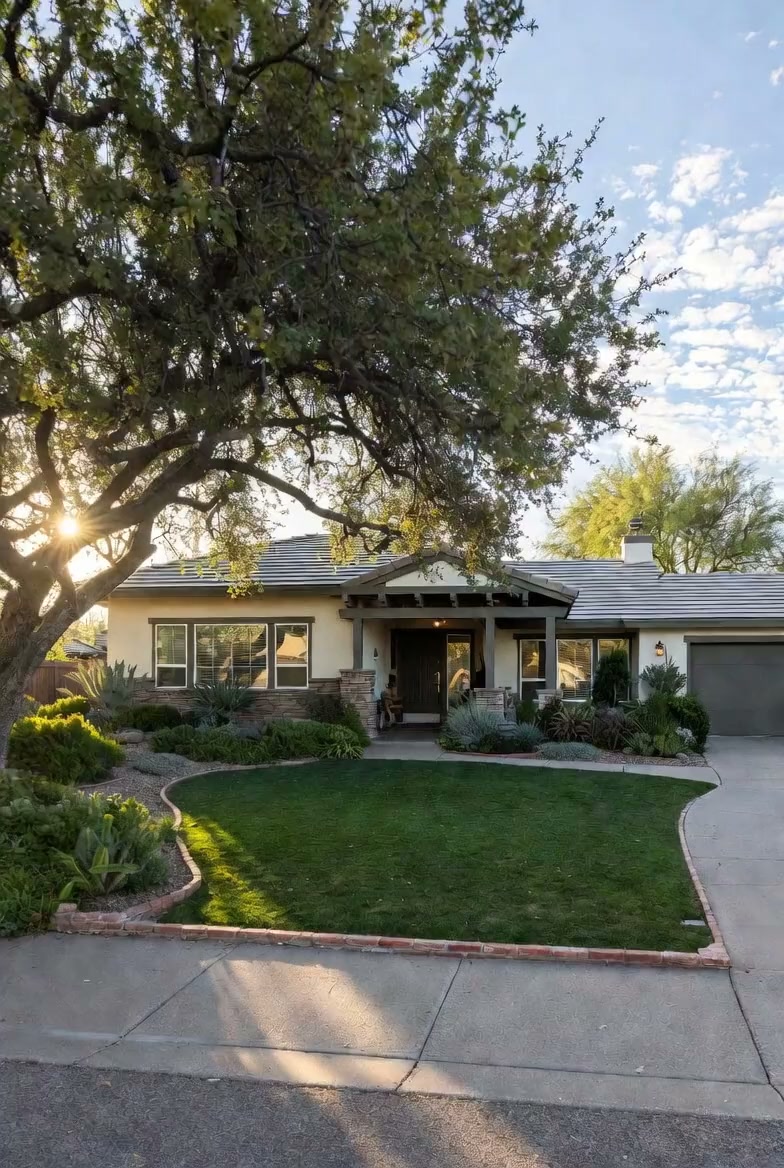
Mesa, Arizona

A peace-of-mind company. Not just a law firm.

Flat-fee estate planning for Arizona families and business owners.

Your Estate Plan Scorecard

Six quick questions. Watch your plan draw itself — documents, drawing, and a fee estimate.

About 60 seconds · Free · No login required

Get Started →
Advice for where you are.
Click a life stage to see what matters now
From $2,300Flat fee, in writing, before you commit
3 weeksFirst call to signed documents, typically
ZeroHourly bills — routine questions included
Downtown Mesa48 N Macdonald · video anywhere in AZ

We serve families, business owners, and professionals who want to protect what they've built.

Whether you're planning for your first child or structuring a multi-generational legacy, we bring the same thoroughness and personal attention to every client.

Pricing

Priced like a menu. Not a meter.

Every fee is flat and in writing before you commit. No hourly billing, no upcharge for calling with a question. The estimates get confirmed at your free consult.

Open the full menu
The cost of probate

What happens after you die — with a trust, and without.

Drag through the twelve months that follow. Same family, same house, same accounts. The only difference is whether a funded trust exists.

WEEK ONE
With a funded trust

NoneCourt involvement
PrivatePublic record
Without a plan

$0Typical cost so far
WaitingWhere things stand
With a funded trust
Without a plan

TYPICAL ARIZONA PROBATE: 6–12 MONTHS AND $3,000–$10,000 IN COURT FEES AND ATTORNEY TIME. MOST TRUST ADMINISTRATIONS WRAP UP IN 3–9 MONTHS, PRIVATELY.

McKay made the entire process feel manageable. We went from having nothing to a complete estate plan in three weeks — and we actually understand what we have.
Sarah & David M. · Mesa, AZ

Common questions, answered

Visit with an attorney. Free.

Thirty minutes, no obligation. We'll learn about your situation, tell you exactly what you need, and quote a flat fee before you commit to anything.

Not ready to talk? Start in the Field Guide →

The Plan Previewer

Preview your plan.

Six quick questions. You'll see the documents you'd get, a drawing of how they fit together, and a flat-fee estimate. No email required to see any of it.

Question 1 of 50%
YOUR PLAN DRAWS ITSELF HERE
AS YOU ANSWER
Fig. 2 — Your plan, so far. Answer the questions and watch it take shape.

Here's your plan.

The documents we'd likely recommend

    The estimate below comes from your answers and our historical averages — a price quote in pencil. An attorney confirms the real number, sometimes higher, sometimes lower, after reviewing your documents and situation in the free consult. The figures are just below.

    Your estimate, from our averages

    Want this as a keepsake PDF?

    We'll send your drawing, document list, and estimate — plus the two questions we'd ask you first.

    Done — it's on its way to your inbox. If you'd rather just talk it through, the consult is free: grab a time.
    Book the free consult
    The price list

    Clear pricing. Built for what you need.

    We work on a flat-fee basis. These are our price estimates, confirmed or adjusted in your free consultation. You'll know exactly what you're paying before you commit to anything.

    Complex planning

    Some situations need more than a package.

    Business owners, high-net-worth families, and estates with layered tax considerations get planning with more moving parts. Every one of these engagements is different, so we scope it in your free consultation and put the quote in writing before any work begins.

    Discuss your situation
    The math

    A plan costs less than not having one.

    A complete estate plan avoids probate entirely. Most families spend less on their whole plan than they would on a single probate filing — before counting the time, the stress, and the family conflict that planning prevents.

    Average Arizona probate — court fees & attorney time$3,000–$10,000
    Average Arizona probate — duration6–12 months
    Court file visibilityPublic record
    Complete flat-fee plan, married couplefrom $2,800
    Pricing questions

    Asked at almost every consult.

    Core Estate Planning for a married couple starts at $2,800 and for a single individual starts at $2,300. Add-ons like LLC formation, blended family provisions, or asset protection trusts are priced separately. Complex Estate Planning (business succession, QSBS, tax strategies) is quoted after consultation because the scope varies significantly.
    Yes, when it helps. Half due at signing of the engagement letter and half due at signing of the documents is the standard structure. We can split it further for clients who need it.
    Amendments and updates are quoted separately as needed, also at a flat fee. A trust amendment or restatement typically runs $650 to $2,500 depending on complexity. We recommend reviewing your plan after any major life event and every three to five years. Our annual maintenance plan ($350 per review or $950/year) covers regular check-ins and minor amendments.
    The figures on this page are average starting points, not promises. Every plan is tailored to your situation, and your actual fee may be higher or lower. You will receive a written fee quote after your free consultation, before you commit to anything.
    Book the free consultation Estimate my fee in 60 seconds
    The Field Guide

    Estate planning, explained properly.

    Plain-English answers built for Arizona — community property, our probate rules, our courts. Written by the attorneys who draft the plans, not a content farm.

    On this page
    Life stages

    Find your life stage.

    Tap what you already have — we'll show the gap
    Your checklist — tap what you already have
    The unchecked gap is what the free consult fixes.
    The full index

    Fourteen guides. Short answers first.

    Tap a title for the short answer

    Honest answer: not every family — but most Arizona homeowners, yes. A funded trust skips probate, handles incapacity privately, and keeps your kids' shares managed until the ages you choose. The guide covers when a will alone is genuinely enough.

    A.R.S. § 14-2101 hands your estate to a fixed list of relatives, and a judge — not you — decides who raises your kids. The guide walks the exact sequence, what it costs, and how long your family waits.

    The defaults quietly favor the surviving spouse's side — your kids from a prior relationship can end up with nothing. QTIP trusts, beneficiary audits, and a neutral trustee keep it fair to both sides, on paper.

    The whole fee, in writing, after your free consult and before you commit. Core plans start at $2,300 single / $2,800 married; add-ons are priced like a menu, not a meter.

    Often the largest asset a young family has — and the most commonly mis-aimed. Who should own the policy, why the trust is usually the right beneficiary, and what happens if both parents go at once.

    A will alone can force a fire sale of the business you built. Buy-sell agreements, operating-agreement coordination, and succession planning keep it running — and keep the income flowing to your family.

    The long-form version: separate vs. community property, QTIP mechanics, trustee selection when two families share one estate, and the conversation most couples avoid until a courtroom has it for them.

    At 18, HIPAA locks your parents out of your medical information and nobody can act for you in an emergency. Two documents fix it — a healthcare directive and a financial power of attorney — in about an hour.

    Most assets acquired during marriage are owned 50/50 no matter whose name is on the title. What that changes at death, why commingling is the classic mistake, and what happens to out-of-state trusts that move here.

    Guardianship designations, trusts that hold kids' shares to the ages you choose, and life insurance that lands in the right hands. The complete playbook for Arizona parents, in plain English.

    LLCs, titling, and trust structures shield what you've built — but only if they exist before a claim does. Move assets after a threat appears and A.R.S. § 44-1004 can unwind the whole thing.

    Arizona revokes some ex-spouse provisions automatically (A.R.S. § 14-2804) — but not the beneficiary form on your 401(k) or life insurance. Federal law sends those to whoever is named, decree or not.

    The five years before you stop earning are the window: refresh your agents, coordinate retirement accounts with the SECURE Act's 10-year rule, check beneficiary deeds, and get long-term care answered while options still exist.

    Charitable remainder trusts, donor-advised funds, and dynasty trusts — which Arizona lets run essentially forever. Plus the part most families skip: telling the people in the plan that they're in it.

    The free library

    The Arizona Probate Guide

    Six pages, plain English: what probate really is, what it costs a family, and the paths around it. Enter your email and it downloads instantly — print it or send it to a sibling who needs it.

    ALSO COMING TO THE LIBRARY: THE ARIZONA ESTATE PLANNING GUIDE · PARENTAL POWER OF ATTORNEY

    Downloading now — and it's yours to keep: open the Probate Guide.
    Questions we hear every week

    Straight answers.

    Our flat-fee estate plans start at $2,300 for individuals and $2,800 for married couples. That includes a revocable living trust, pour-over will, financial and healthcare powers of attorney, deed transfer for your primary residence, and a complete document binder. There are no hourly billing surprises and no upcharges for routine questions. More complex situations are quoted as flat fees during the consultation, before you commit.
    Most of our work is by video — easier on schedules and just as effective for the planning conversations. The only step that legally has to happen in person is the signing, where Arizona requires a notary and two witnesses. For clients in Mesa, Gilbert, Chandler, Tempe, Queen Creek, or Scottsdale who would rather meet in person from start to finish, our office is at 48 N Macdonald in downtown Mesa.
    About three weeks from the consultation to signed documents in your hands, for most clients. The bulk of that is a drafting and review cycle — we send you the documents, you read them, we revise based on your questions, and we schedule a signing. We can move faster when there is a real reason to (a serious diagnosis, an upcoming surgery, an out-of-state move).
    Yes. Arizona is one of nine community property states. In short: most assets acquired during marriage are owned 50/50 by both spouses, regardless of whose name is on the title. This affects how property gets characterized at death, how it can be transferred during life, and how trusts should be structured for married couples. If you moved to Arizona from a non-community-property state, an out-of-state trust may need adjustments to align with how Arizona treats your property.
    Your estate is distributed under Arizona's intestacy statutes — a default ordering that may or may not match what you would have chosen. For a married parent of minor children, the surviving spouse and children typically share. If you are unmarried, your parents, then siblings, then more distant relatives inherit in a fixed sequence. The court also decides who raises your children, since you did not name a guardian. Intestacy is rarely what people would have chosen if they had been asked.
    Generally yes — most well-drafted trusts function across state lines. But they often reference the original state's probate code, contain community-property language calibrated to that state's rules, and may have provisions that no longer fit your current situation. We do a structured review and update what needs updating, usually as a partial restatement rather than a full new trust.
    No. Arizona has neither a state estate tax nor an inheritance tax. The federal estate tax still applies, but only at very high exemption levels — most Arizona families do not owe federal estate tax. For high-net-worth clients with estates approaching the federal threshold, we do estate tax planning. For most other clients, the question is mostly academic.
    Retirement accounts pass by beneficiary designation, not by will or trust. Whoever is named on the account form receives it directly, regardless of what your other documents say. This makes it critical to coordinate beneficiary designations with the rest of your plan. Naming a trust as beneficiary is sometimes the right move, sometimes not — it depends on your beneficiaries' situations and the SECURE Act rules around stretch payouts.
    For most Arizona married couples with combined finances, a joint trust is simpler and works well. For couples with significant separate property, prior marriages with children from those marriages, asset protection concerns, or substantial estate tax exposure, separate trusts are usually the better answer. We walk through the tradeoffs in the consultation rather than defaulting to one approach.
    Arizona has adopted a version of the Revised Uniform Fiduciary Access to Digital Assets Act, which gives your trustee or executor authority to access digital accounts when properly authorized. We include digital asset language in our documents. For cryptocurrency specifically, the bigger issue is access — your beneficiaries cannot inherit what they cannot access. Document seed phrases or wallet keys somewhere your trusted person can find them, separately from the trust itself.
    Common, well-meaning, and almost always a mistake in Arizona. Adding a child to your deed gives them a present ownership interest, which exposes the house to their creditors, their divorce, and their decisions. It also typically eliminates the step-up in basis your child would otherwise get at your death, potentially creating a six-figure capital gains tax bill. A beneficiary deed or a trust accomplishes what you actually want without the side effects.
    Only for what is actually titled in the trust's name. An unfunded trust is one of the most common reasons families end up in probate despite having paid for a "plan." If you are not sure whether your trust is funded, we can review it — usually as part of the consultation, no charge — and tell you what is in and what is missing.
    That is trust administration, and it is what trusts are designed for. The successor trustee notifies beneficiaries, inventories the assets, pays final debts and taxes, and distributes according to the trust terms — typically without court involvement. We can guide a successor trustee through the steps, whether or not we drafted the original trust. Most administrations wrap up in three to nine months.
    For very simple situations — single, no kids, modest assets, no real estate — a will from a reputable online service may genuinely be enough. For most Arizona homeowners, parents, business owners, or anyone with combined assets above the small estate threshold, the cost of getting it wrong is far higher than the cost of getting it right. We will tell you honestly if your situation does not need attorney drafting; we have turned away clients before.
    Speak the language

    A short glossary.

    Revocable living trust
    A trust you create and control during your lifetime. The workhorse of Arizona estate planning: it avoids probate and manages incapacity privately.
    Pour-over will
    A simple will used alongside a trust. Anything not already in the trust at death "pours over" into it. A safety net, not the main plan.
    Probate
    The court-supervised process of validating a will, paying debts, and distributing assets. Usually avoidable with a funded trust.
    Funding (a trust)
    Retitling assets — real estate, accounts, business interests — into the trust's name. An unfunded trust does not avoid probate no matter how well it is drafted.
    Community property
    Property acquired by spouses during marriage in Arizona, owned equally by both. Has important planning and tax implications at death.
    Beneficiary designation
    A form naming who receives an account directly at death. It overrides what your will says for that account.
    QTIP trust
    Gives a surviving spouse income for life while preserving principal for other beneficiaries — often children from a prior marriage. Common in blended family plans.
    Successor trustee
    The person or institution that takes over your trust when you die or can't manage it. Often the single most important choice in the plan.
    Durable power of attorney
    A power of attorney that stays valid if you become incapacitated. In Arizona it must explicitly say it is durable.
    Healthcare directive
    The Arizona document that names a healthcare agent and records your treatment wishes. Covers what other states split into two documents.
    Minor's trust
    Holds a child's inheritance until the ages you choose. Prevents an 18-year-old from receiving a lump sum.
    Intestate
    Dying without a valid will. Arizona's statute (A.R.S. § 14-2101 and following) decides who inherits. Rarely matches what someone would have wanted.
    Preview your plan Ask us directly — it's free
    About the firm

    A peace‑of‑mind company.

    Mesa Estate Planning helps Arizona families and business owners build plans they actually understand, priced up front and built around what matters most.

    What we believe

    The documents are the means. Peace of mind is the point.

    Most people don't need a more complicated estate plan. They need someone to figure out what actually matters, explain it in plain English, and put it in writing. That's the idea this firm is built on.

    Who we serve

    Arizona families and business owners.

    Families with young children, business owners approaching an exit, blended families trying to be fair to everyone, and high-net-worth clients managing real complexity. Different situations, same standard: a plan you understand, built around what you actually want.

    How we work

    Flat-fee. Slow, then quick.

    We take the time up front to understand your situation, then move fast once we do. Flat fees quoted before you commit, drafts sent in advance, and a firm that actually answers the phone.

    Why “peace of mind”

    The 1% playbook, opened up.

    Asset protection trusts, LLC structures, estate-tax freezes: tools family offices use every day, and most firms reserve for seven-figure retainers. We draft with the same tools at a flat fee, for Arizona families and business owners. If your net worth has a comma in it, you're allowed to plan like it has two.

    Preview your plan See flat-fee pricing
    Our process

    We go slow, then quick.

    We take the time up front to actually understand your situation. Once we do, we move fast — clear answers, drafts in advance, and a firm that keeps you in the loop. Most plans take about three weeks from first call to signing.

    Step 01

    Free consultation

    A 30-minute conversation to understand your situation. No sales pitch.

    Step 02

    Written recommendation

    We tell you what we think you actually need and quote the flat fee before you commit.

    Step 03

    Drafts in advance

    You review everything before the signing meeting, with plain-English summaries.

    Step 04

    Signing and funding

    We sign, notarize, and give you the exact steps to fund your trust so it actually works.

    Your attorneys

    McKay and Jay.

    Every engagement is personal. You work directly with the attorney writing your plan — not an associate, not a paralegal running a template.

    MT

    McKay Tucker

    Founding Attorney

    McKay founded the firm because he saw too many families leave other offices with a binder, a big invoice, and no real peace of mind. He works with every client personally, from the first consultation through signing.

    He focuses on revocable and irrevocable trusts, asset protection, business succession, and tax strategies for higher-net-worth families. McKay lives in Mesa with his wife Chelsea and their four kids.

    JA

    Jay Allen

    Of Counsel

    Jay has practiced estate planning in Mesa for nearly three decades. Over that time he has represented clients across every income level and built deep knowledge of Arizona trust, probate, and community property law.

    He works with McKay on every client matter. His particular strengths are trust administration, tax planning, and the complex engagements where experience makes the difference.

    They listened, they explained, and then they got it done. I felt like I finally understood my own plan instead of just signing things.
    A recent Mesa EP client

    Ready to talk?

    Thirty minutes, no obligation. We'll learn about your situation, tell you what you actually need, and quote a flat fee before you commit to anything.

    Book a consultation

    Pick a time. We'll call you.

    Thirty minutes, free, no obligation. We'll learn about your situation, tell you exactly what you need, and quote a flat fee before you commit to anything.

    MT

    Free 30-minute estate plan consultation

    WITH McKAY TUCKER, ESQ.
    30 min
    Phone call
    Arizona (MST)
    Open the calendar

    Rather not book online? Call (480) 269-5737 or email info@mesaestateplan.com. Office at 48 N Macdonald, downtown Mesa.

    Or send a note

    Tell us what's going on.

    Got it. We read every note and reply within one business day. If it's time-sensitive, call (480) 269-5737.
    Call Preview my plan